Duża dysza kontra mała dysza: Jak wybrać, aby zachować funkcjonalność części i zapewnić dużą prędkość drukowania
When it comes to professional 3D printing, one of the key decisions that can significantly impact your results is
nozzle size. Whether you're designing functional prototypes, large-scale models, or high-speed production parts,
the choice between a large nozzle and a small nozzle is crucial. For users of large 3D printers, understanding the
strengths and limitations of each option can save time, reduce material waste, and improve overall print quality.
Small Nozzles: Precision and Detail
Small nozzles, typically ranging from 0.2mm to 0.4mm, are widely used in professional 3D printers when detail
and surface finish are critical. They allow for:
High-resolution prints: Ideal for functional parts with intricate geometries.
Better layer adhesion: Smaller extrusion widths create more contact between layers, increasing structural integrity
for smaller parts.
Smooth surfaces: Fine nozzles produce cleaner edges and more precise curves, reducing post-processing time.
However, small nozzles come with trade-offs. Printing large parts with a small nozzle can be extremely time-consuming.
Even with advanced filament and a high-performance, large 3D printer, the slower speed might limit production
efficiency when large models or functional prototypes are needed quickly.
Large Nozzles: Speed and Strength
Large nozzles, often ranging from 0.6mm to 1.2mm or more, are a game-changer for large-format 3D printers.
They provide:
Faster printing times: Extruding more filament per layer allows for quicker completion of large parts.
Increased part strength: Thicker extrusion lines create more solid layers, making parts more durable.
Reduced print failures: For functional prototypes that don't require ultra-fine details, a large nozzle can minimize
clogging and warping.
The main drawback of large nozzles is reduced surface detail. Curved surfaces or complex geometries may look
rougher compared to prints from a small nozzle. For professional 3D printing applications, balancing speed and
detail is key.
Choosing Between Small and Large Nozzles
Deciding which nozzle size to use depends on several factors:
Part Functionality: If the part requires mechanical strength, such as brackets, jigs, or housings, large nozzles often
perform better. For aesthetic or highly detailed parts, small nozzles are preferable.
Part Size: Large-format 3D printers benefit from large nozzles for bigger objects, dramatically reducing print times.
Small nozzles are more suited for small or medium-sized prints.
Production Volume: High-speed printing and batch production favor larger nozzles. For prototyping and one-off
models where surface finish is critical, smaller nozzles are ideal.
Filament Considerations: Regardless of nozzle size, using high-quality filament can improve layer adhesion and
print consistency. Large 3D printers designed for professional use handle both small and large nozzles efficiently,
making them versatile for multiple applications.
Practical Tips for Large 3D Printer Users
Experiment with hybrid approaches: Some large-format 3D printers allow switching between nozzle sizes
mid-print, optimizing both speed and detail.
Optimize slicer settings: Adjust layer height and print speed according to nozzle size to get the best balance of
quality and efficiency.
Consider dual-extrusion setups: Using a large nozzle for structural layers and a small nozzle for detailed features
can be an effective strategy for functional parts.
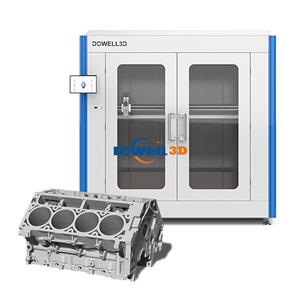
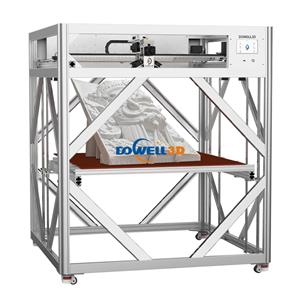
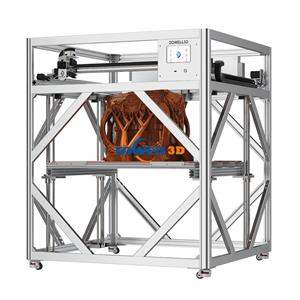
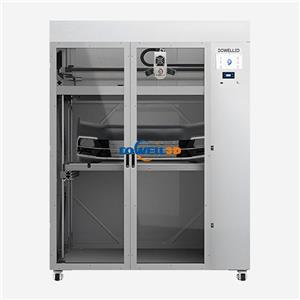
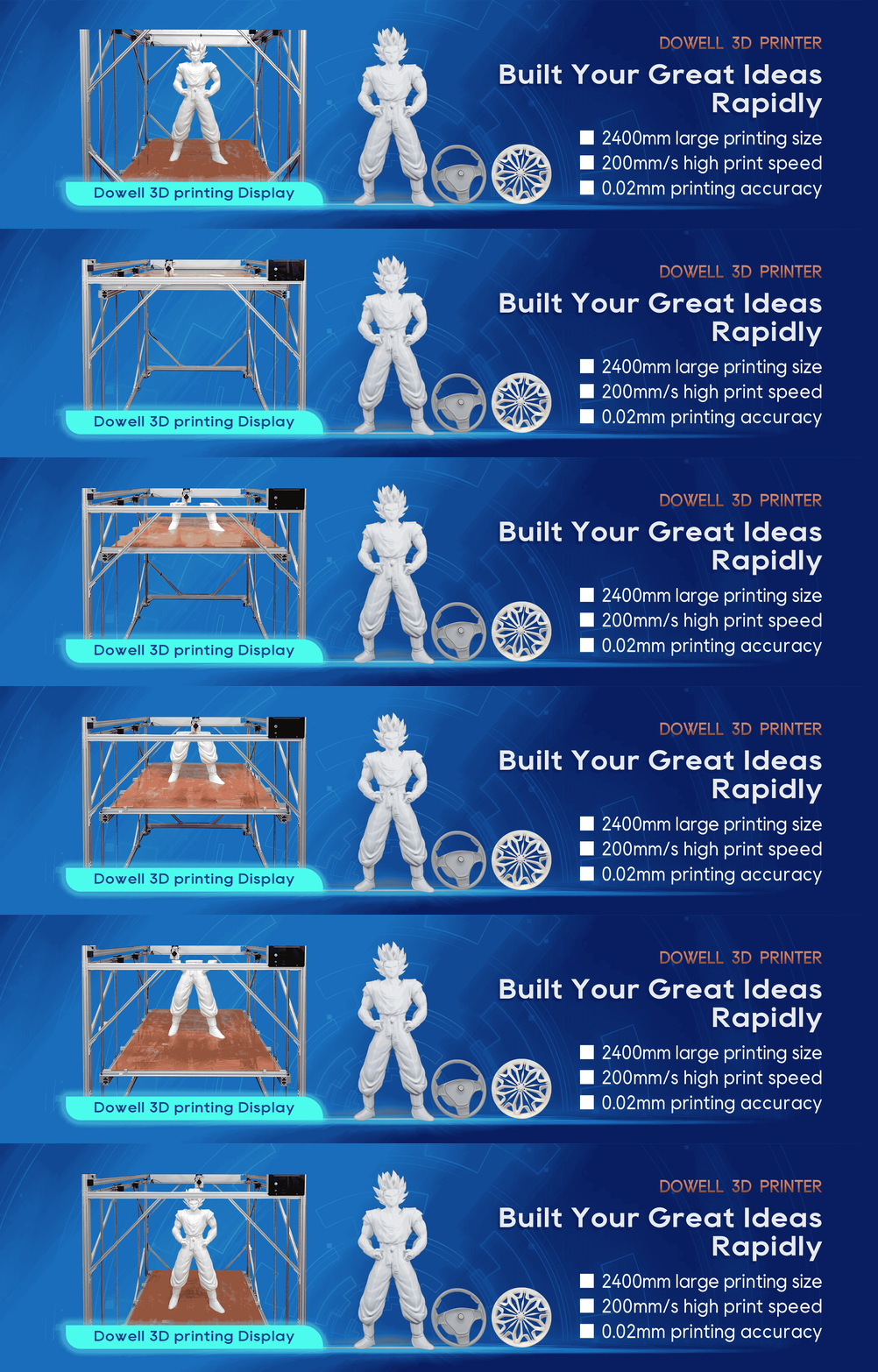
Large-format 3D printers, such as Dowell 3D's range, offer robust performance for both large nozzles and small
nozzles, making them ideal for professional users who need flexibility and reliability in every project. With the right
nozzle selection, you can achieve high-speed printing without compromising part quality.